View fullsize
View fullsize
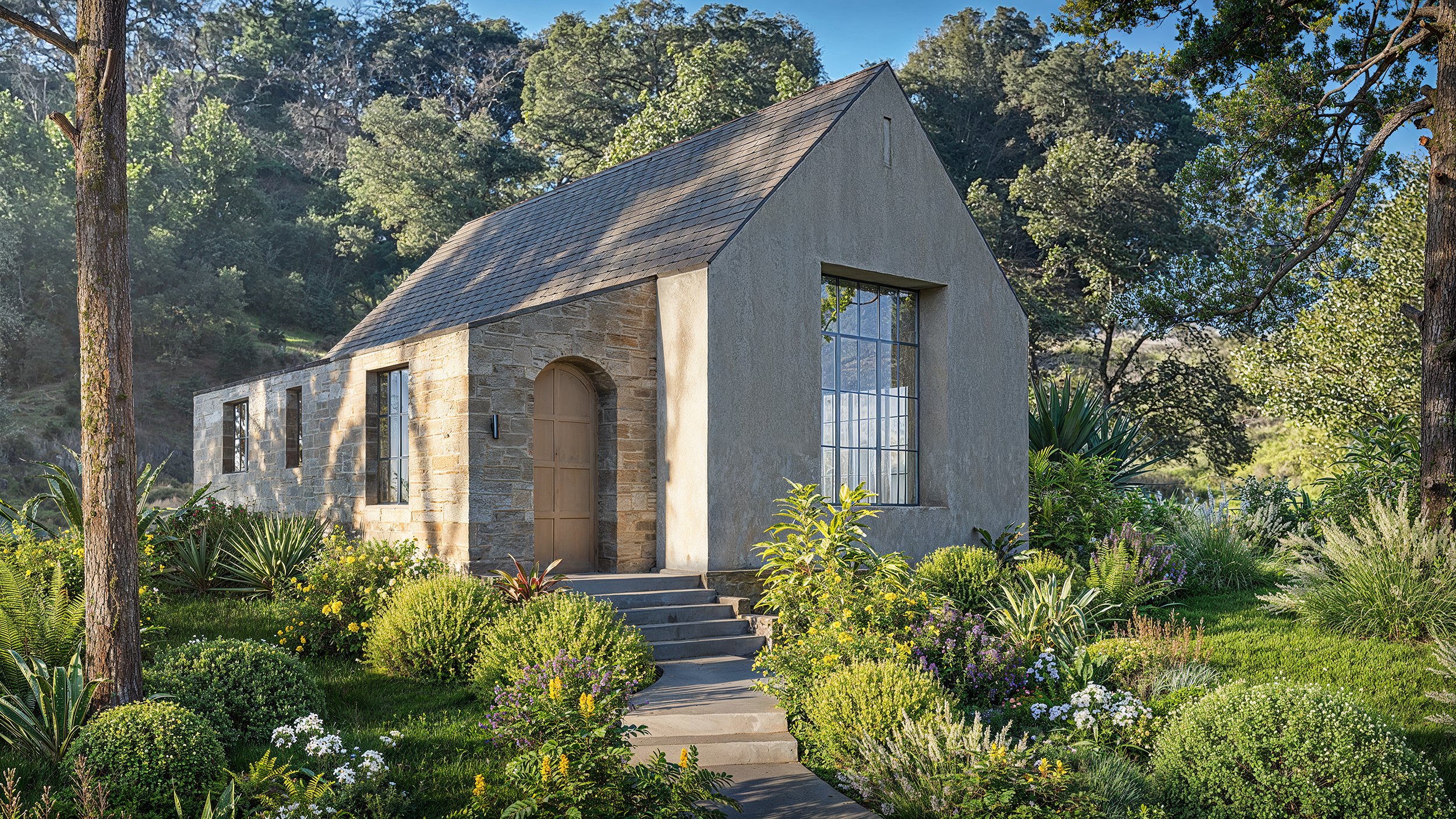
As the architectural illustrator behind these renderings, my goal is to breathe life into the cold, technical data of blueprints and elevations. While a 2D floor plan is a vital construction document, it often remains a "flat" abstraction to a client, requiring a leap of faith to imagine how light, texture, and space will actually feel. These high-fidelity visualizations bridge that imaginative gap, transforming lines into a tangible experience.
Capturing Atmospheric Truth
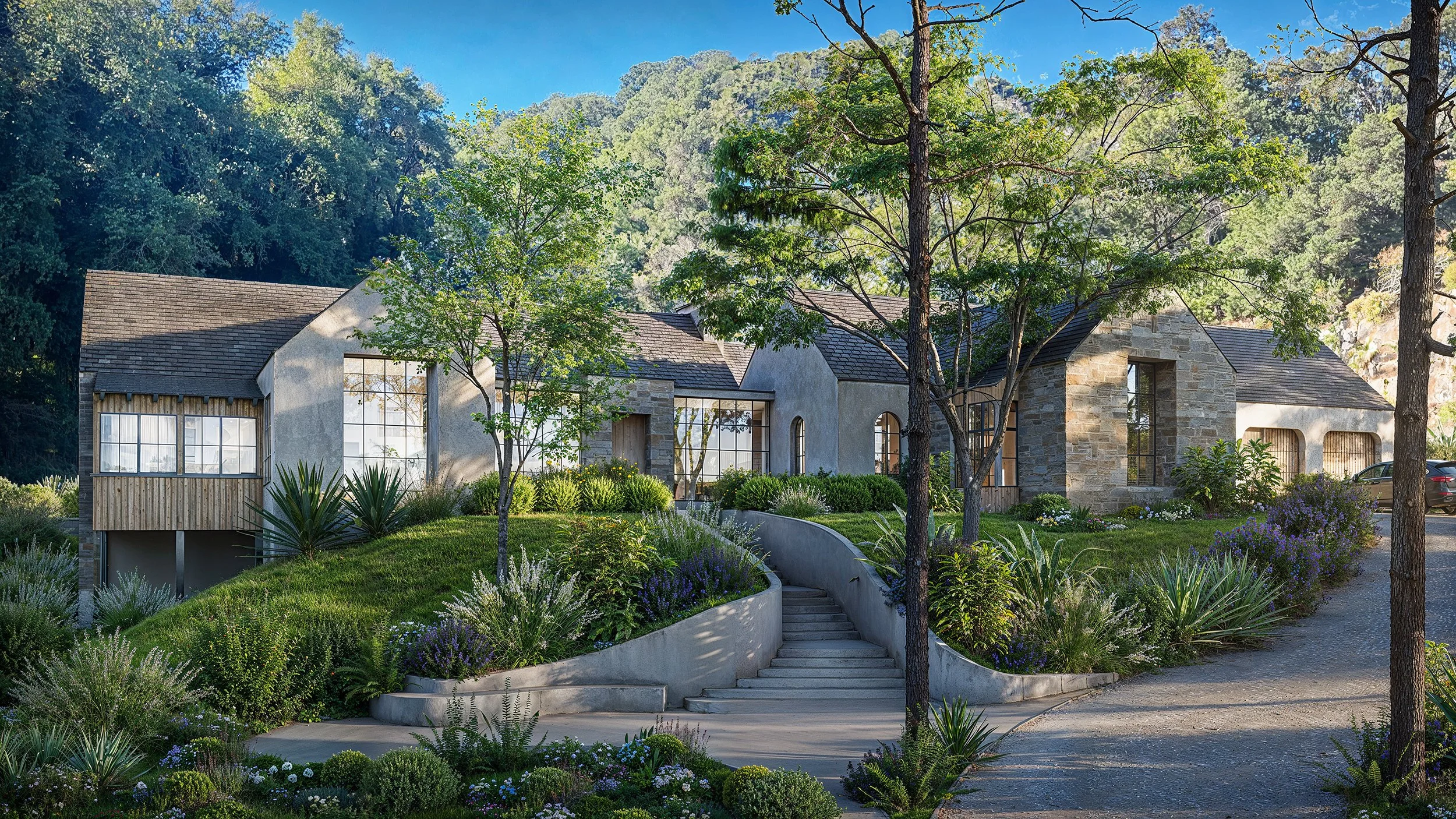
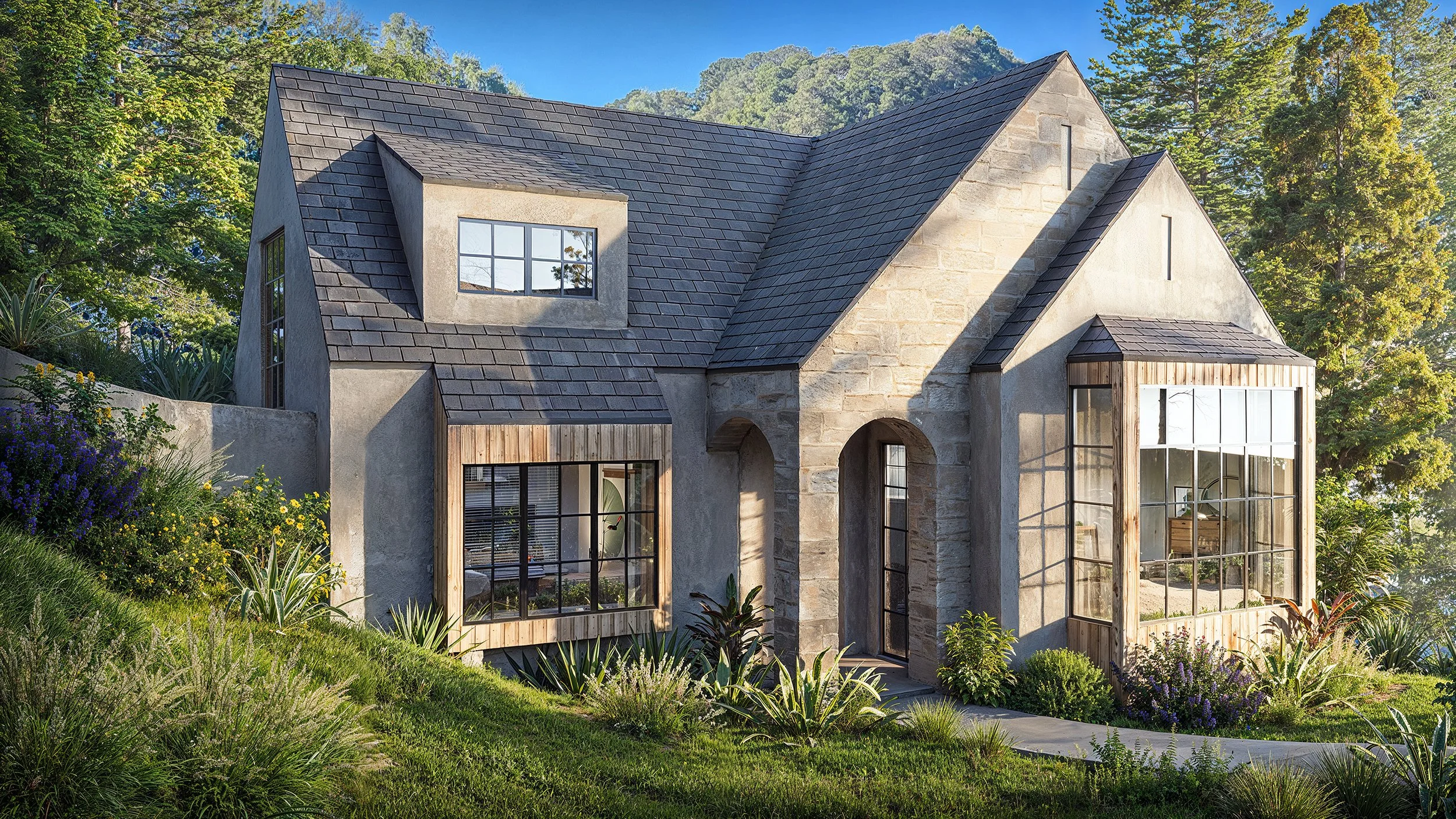
A 2D drawing can label a wall as "stone," but this rendering shows the tactile reality of how that stone catches the soft, raking morning sun. It explains the "atmospheric truth" of the design—how the massive, earth-toned masonry of the right wing grounds the house, while the expansive glazing in the center creates a seamless, transparent bridge to the forest behind it. This allows the architect to explain the emotional intent of the home: a sanctuary that is simultaneously private and open to its natural surroundings.
Clarifying Complex Spatial Relationships
These renderings help the client navigate the property's complex topography. In 2D, the relationship between the rising stone staircase, the terraced landscaping, and the varying roof heights can be difficult to decode. Here, the client immediately understands the "journey" of the arrival—how the path winds through curated greenery to reach the recessed entry. This visual clarity eliminates the "unknown factors" that often lead to mid-construction changes, as the client can see exactly how the building's scale relates to a human being standing on the driveway.
A Shared Visual Language
Ultimately, these images serve as a universal language. They allow the architect and client to align on every detail—from the specific grain of the vertical wood siding to the way the trees' shadows will dance across the facade. By seeing the finished project "long before the first brick is laid," the client moves from uncertainty to confidence and emotional investment, ensuring the final build matches their dream perfectly.
Would you like to see how these renderings can be adapted to show the interior spatial flow or how the home looks under different lighting conditions?
source https://bobby-parker.com/architectural-rendering-blog/modern-limestone-hill-country-villa-3-bedroom-architectural-rendering