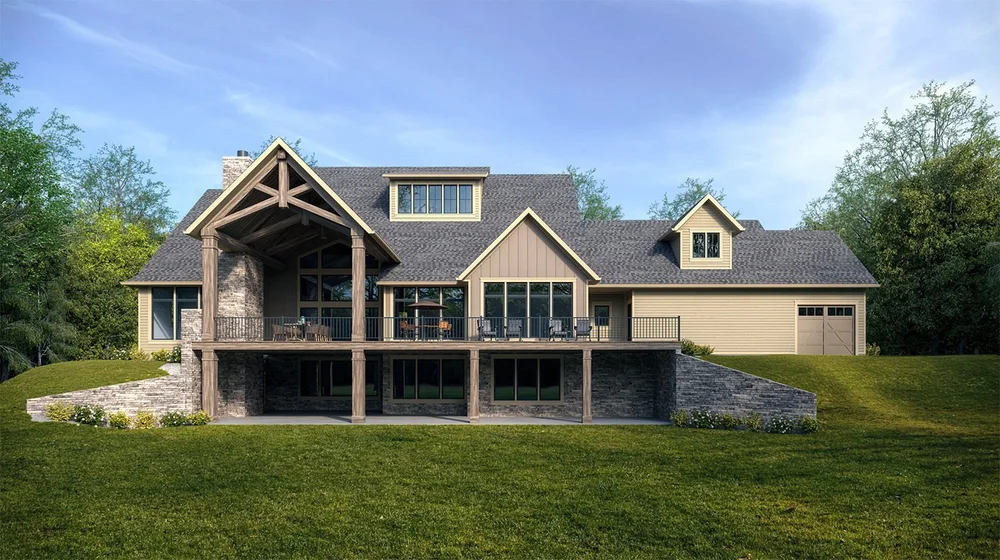
Tuesday, March 24, 2026

Will AI Replace Residential Renderers?

If you have been following design and visualization trends in 2026, you have probably seen some version of the same question: will AI put renderers out of business?

The short answer is no. But it is absolutely changing the business.

AI image tools are getting faster, cheaper, and easier to use. That means architects, interior designers, developers, and homeowners can now generate quick concept visuals in minutes instead of waiting days for a first pass. For simple presentations, that is a real shift.

At the same time, AI still struggles with the things that matter most in professional architectural visualization: scale, buildability, material accuracy, lighting consistency, camera logic, and design intent.

So the better question is not whether AI will replace renderers. It is this: which parts of rendering are becoming automated, and which parts still need a trained eye?

Here is where things stand.

1. AI is replacing some early-stage visualization tasks

This is the part many people are reacting to, and it is real.

AI can already help generate:

  • quick mood images

  • concept directions

  • rough interior or exterior ideas

  • alternate material looks

  • fast presentation visuals for client discussions

For many designers, that is enough to improve communication early in a project. If a client wants to see a space with darker floors, a different stone palette, or a wallpaper idea, AI can help create a rough visual immediately.

That means some low-stakes rendering work is already being compressed.

2. AI is not replacing precise architectural rendering

This is where the hype usually breaks down.

Professional renderings are not just pretty images. They are communication tools. They help clients, consultants, and teams understand what is being designed before it gets built. That requires accuracy.

AI still has trouble with:

  • proportions and scale

  • window and door alignment

  • realistic furniture sizing

  • material consistency across views

  • detailed floor plan interpretation

  • repeatable revisions

  • matching exact architectural drawings

That is a problem if the rendering needs to support design decisions, approvals, marketing, or construction alignment.

In other words, AI can suggest. Human renderers still have to resolve.

3. The biggest change is speed, not total replacement

What AI is really doing is changing expectations around speed.

Clients are getting used to seeing visuals faster. Designers are getting more comfortable using generated imagery as part of concept presentations. Studios are experimenting with AI to speed up ideation, admin tasks, post-production, and certain production steps.

That does not eliminate rendering firms. It changes what clients expect them to deliver.

The old model was often: wait, pay, review, revise.

The new model is becoming: explore quickly, narrow direction sooner, then produce final visuals with more precision.

That means renderers who adapt can actually become more valuable, not less.

4. Entry-level rendering work is under the most pressure

If there is one part of the market that is most exposed, it is lower-complexity, lower-budget rendering work.

Why?

Because that is where clients are most willing to trade precision for speed and cost savings.

If someone only needs a quick visual to sell an idea internally or help a homeowner imagine a room, AI may be good enough. That kind of work used to require outsourcing or a lower-cost rendering partner. Now, some of it can be handled in-house with prompting and basic editing.

That does not mean the entire market disappears. It means the lower end of the market gets more competitive.

5. High-end rendering still depends on human judgment

At the high end, the value of rendering is not just image generation. It is interpretation.

A strong renderer understands:

  • what the architect is trying to communicate

  • how to frame the most important design moments

  • how materials should actually read in light

  • how to make an image feel believable, not just attractive

  • how to carry design intent across multiple views and revisions

That level of nuance still matters, especially in luxury residential, hospitality, mixed-use, and design-led development work.

AI can help with efficiency. It still does not replace judgment.

6. The renderers who win will use AI, not ignore it

This is probably the most important takeaway.

AI is not just a threat to rendering studios. It is also a tool for rendering studios.

The firms that stay competitive will likely use AI to:

  • accelerate concept development

  • test more directions early

  • speed up internal workflows

  • reduce repetitive production steps

  • improve turnaround without sacrificing quality

The firms that struggle will be the ones trying to defend every old process just because it is familiar.

In 2026, the market is rewarding teams that can combine speed with expertise.

7. Clients still need help knowing what looks right

One thing that often gets overlooked in the AI conversation is this: generating an image is not the same as evaluating an image.

A client, homeowner, or even a busy design team may not always catch what is off. But professionals do.

That is still a major reason people hire renderers.

The value is not only in making the image. It is in knowing when the image is wrong, misleading, or visually inconsistent with the project.

That critical eye is still hard to automate.

So, will AI replace architectural renderers?

No. But it will reshape architectural rendering.

AI is already taking over some of the quick, rough, early-stage visualization work that used to require more time and cost. It is helping designers move faster and explore more ideas upfront.

But when a project needs precision, consistency, realism, and design intelligence, human renderers still matter.

The likely outcome is not replacement. It is segmentation.

Some clients will use AI for fast concept visuals.

Some will still need professional rendering partners for polished, accurate imagery.

And the strongest studios will be the ones that know how to do both: move quickly when speed matters, and deliver precision when the work demands it.

What this means for residential projects

In residential design, that balance is becoming especially important.

Homeowners and builders want fast visuals. They also want confidence before making expensive decisions. That creates a growing need for rendering partners who can work efficiently while still producing clear, believable imagery grounded in the actual design.

That is where the human role remains strong.

AI may help accelerate the process, but it still takes experience to turn a concept into a rendering that feels trustworthy, useful, and buildable.

Need residential renderings with speed and clarity?

Bobby Parker helps architects, designers, and residential developers create photorealistic imagery that communicates the design clearly without overcomplicating the process.

If you need residential renderings that balance efficiency, realism, and fast turnaround, let’s talk.


source https://bobby-parker.com/architectural-rendering-blog/will-ai-replace-residential-renderers

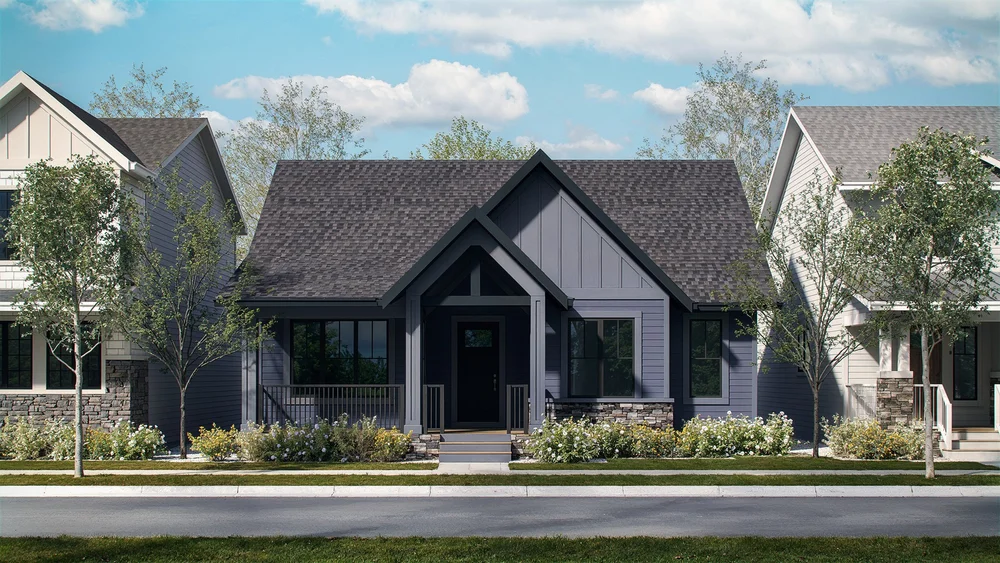
Monday, March 16, 2026

March Madness! Is March Still Peak Season for Residential Renderings?

Exterior 3d Rendering of a Single Family Home.

If you have ever tried to book an architectural illustrator in March, you have probably heard some version of: “My schedule is full.” In architectural visualization, March is peak season. It is not random. It is a predictable collision of residential building timelines, budget deadlines, and spring marketing launches.

Before we get into the “why March,” it helps to look at what residential teams are prioritizing right now, because those design trends also influence how many views, angles, and options clients request.

What’s Trending in Residential Builds in 2026

We are seeing a few clear themes shaping what clients want to communicate through imagery:

Warm modern materials
Limestone, travertine, textured plaster, and light woods are showing up across modern villas, transitional homes, and hill-country inspired builds. These materials read best when the lighting is calibrated to show texture, not just color.

Darker window systems with softer palettes
Bronze and black frames are pairing with warmer masonry, wood soffits, and calmer exterior colors. The renderings have to balance contrast without making the home feel harsh.

Indoor-outdoor living as a core “selling point”
Large openings, covered terraces, courtyards, and outdoor kitchens are often the hero moments. That usually means more views are needed to tell the story: entry, rear elevation, terrace life, and a twilight option.

Energy-smart detailing that clients want to feel good about
Heat pumps, improved building envelopes, solar readiness, and all-electric planning are showing up more often. Even when the tech is not visually obvious, clients want the home to feel modern, efficient, and future-proof.

Flexible space and “life-ready” layouts
Home offices, bonus rooms, ADUs, and multi-use spaces matter more than ever. Residential renderings increasingly need to communicate how the home lives, not just what it looks like.

Resilience and climate-aware design
Better drainage, durable cladding, deeper overhangs, and shading strategies are becoming part of the design conversation. When these details are modeled clearly, they help reduce uncertainty and change orders later.

Now, here is why March becomes the bottleneck.

1. The Spring Construction Surge

As weather improves, projects move from planning to action. For many residential builds and renovations, April and May are target start months. That makes March the moment teams need final visuals to:

  • align on exterior selections before procurement

  • support permits and approval conversations

  • secure final funding or homeowner sign-off

  • finalize pre-build marketing materials

If images are not ready by late March, schedules get tight fast.

2. Fiscal Deadlines and “Use It or Lose It” Budgets

A lot of organizations operate on a fiscal year that ends March 31. When teams have remaining budget, they often rush to commission renderings before the window closes. This can include municipalities, nonprofits, and corporate groups funding housing initiatives or planning work. It is one of the less obvious drivers of March demand.

3. The Real Estate Pre-Sale Window

Spring is prime time for residential sales activity. Builders and developers want listings, brochures, and pre-sale pages ready before buyers start touring in late spring and summer. High-quality renderings bridge the gap between drawings and confident decisions, especially when the home is not built yet.

4. Awards, Features, and Portfolio Timing

March also lands near a cluster of publication cycles, showcases, and submission deadlines. Architects and designers want their work presented cleanly and consistently, which drives a spike in requests for “competition-grade” imagery.

March is busy because the stakes are high. When construction, budget, and marketing all converge, visual exterior renderings become the tool that prevents expensive surprises and keeps momentum.

If you are aiming for an April or May start, the best time to begin the rendering conversation is early February.


source https://bobby-parker.com/architectural-rendering-blog/march-madness-is-march-still-peak-season-for-residential-renderings

Friday, March 6, 2026

A New Chapter for Bobby Parker Renderings

Modern Interior Rendering

Large Home Exterior Rendering

After more than fourteen years of working with architects, designers, and home builders across the country, Bobby Parker Renderings is entering a new phase.

I recently accepted a full-time senior position with a design and development firm. As part of that transition, my rendering business will continue operating with production and client services now supported by Studio inHaus, a Chicago-based visualization studio specializing in architectural, product, and automotive visualization.

For existing clients, the goal of this transition is simple: continuity and stability.

The Bobby Parker Renderings brand will continue to serve residential architects, designers, and developers who need clear, photorealistic imagery to communicate their designs. Clients can expect the same focus on accuracy, efficiency, and straightforward project workflows that the brand has always been known for.

Over the years, Bobby Parker Renderings developed strong relationships with architects and residential designers who rely on high-quality exterior renderings to present homes, developments, and design concepts to clients, planning boards, and investors.

Before starting my new full-time role, I want to ensure those relationships and ongoing projects would continue to be supported. I chose to work with Tom Livings at Studio inHaus, whom I have personally known for close to 10 years, as a leader in the Architectural Visualization industry. Studio inHaus brings a larger production team, expanded technical infrastructure, and additional capacity to handle projects reliably while maintaining the standards clients expect. This structure allows the business to continue serving the residential sector while providing the operational depth needed for long-term stability.

What This Means for Clients

If you’ve worked with Bobby Parker Renderings before, very little will change in how projects move forward.

Clients will still be able to:

Request photorealistic exterior renderings for residential projects

  • Receive clear quoting and defined review stages

  • Work with a team familiar with the typical workflow of residential architects and home designers

Behind the scenes, Studio inHaus will manage production scheduling, rendering pipelines, and client support to ensure consistent turnaround times and reliable project delivery.

Continued Focus on Residential Architectural Visualization

Bobby Parker Renderings has always focused primarily on the residential sector — from single-family homes to small developments and custom architecture.

That focus will continue.

The team will remain dedicated to producing high-quality architectural renderings for residential projects, including:

  • Custom single-family homes

  • Residential developments

  • Spec homes and builder marketing visuals

  • Architectural concept presentations

  • Photorealistic exterior visualizations for planning and approvals

By combining Bobby Parker Renderings long-standing client relationships with Studio inHaus’ production infrastructure, the goal is to provide dependable rendering services that architects and designers can rely on.

Looking Forward

Building Bobby Parker Renderings over the past fourteen years has been a meaningful experience, and maintaining continuity for the clients who supported that journey was an important priority during this transition.

The business will continue to operate under the Bobby Parker name, supported by the Studio inHaus team, with the same commitment to clarity, professionalism, and quality architectural visualization.

For new project inquiries or questions about the transition, please reach out through the usual contact channels.

We look forward to continuing to support your residential design projects.

Contact: hello@studioinhaus.com


source https://bobby-parker.com/architectural-rendering-blog/a-new-chapter-for-bobby-parker-renderings