Friday, October 24, 2025

Log Cabin Renderings - Interior and exteriors

Log Cabin Exterior
Admire the picture-perfect exterior of a log cabin home with a welcoming front porch, exposed timber architecture, and stone accents. Surrounded by trees and natural beauty, this classic log cabin design offers curb appeal, warmth, and a seamless connection to the outdoors—perfect for those seeking a peaceful retreat in nature.
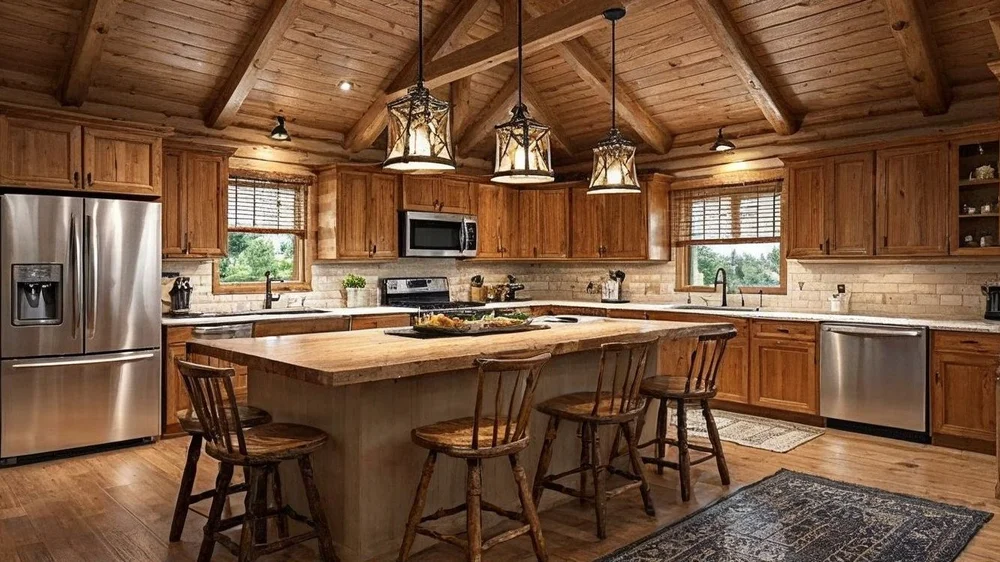
Log Cabin Kitchen
Experience the charm of a rustic log cabin kitchen with natural wood cabinets, exposed timber beams, and a spacious central island. This inviting space features modern stainless steel appliances blended seamlessly with classic farmhouse elements, making it perfect for family gatherings and entertaining in a cozy, woodland-inspired environment

Log Cabin Living Room with Stone Fireplace
Gather in a spacious log cabin living room boasting impressive floor-to-ceiling windows, a stunning stone fireplace, and views of lush greenery. The cozy log furniture, plush textiles, and natural light create an ideal space for relaxation, blending rustic style with comfortable modern living.

Log Cabin Bedroom
Relax in a tranquil log cabin bedroom, complete with handcrafted log furniture, warm wood walls, and scenic outdoor views. The room’s nature-inspired decor and soft lighting create a peaceful retreat, ideal for maximizing comfort and serenity in your rustic home getaway.

Log Cabin Foyer
Step into this welcoming log cabin foyer that highlights rustic elegance, featuring log walls, vintage wooden cabinets, and artisan shelving. Sunlight pours in from large windows, illuminating rich hardwood floors and antique-inspired decor—making this entryway a perfect introduction to the beauty of traditional cabin living.


source https://bobby-parker.com/architectural-rendering-blog/log-cabin-renderings-interior-and-exteriors

Thursday, October 23, 2025

What is your client worth?

Overview

Example: approximately 100 active clients, primarily composed of architects, developers, and design professionals. The business has established long-term relationships with a majority of these clients, characterized by a high level of trust, reliability, and creative excellence.

Client Engagement

  • Average project value: $1,500

  • Client retention: ~80% (most clients return annually)

  • Average relationship duration: 3 years

  • Annual repeat business: Strong, with consistent project flow and referrals

These figures indicate a stable, recurring revenue foundation with low client churn and high satisfaction.

Valuation Basis

The client list value has been calculated using the industry-standard formula for service-based creative businesses:

Per-client value = (Average annual spend × relationship duration × retention factor)
$1,500 × 3 × 0.7 = $3,150 per client

Estimated Value

MetricValueTotal clients100Per-client value≈ $3,150Total client list value≈ $315,000 – $400,000

This range reflects both tangible revenue potential and intangible goodwill — including brand reputation, repeat business history, and portfolio visibility.

Value Drivers

  • Proven long-term relationships in the architectural visualization market

  • Consistent annual project renewal and word-of-mouth growth

  • Portfolio quality that commands trust and repeat collaboration

  • Clean, transferable client database suitable for CRM integration

Conclusion

The current client base represents a high-value asset with a strong foundation for growth, merger, or acquisition. With its established reputation and recurring revenue model, the client list alone could conservatively support a business valuation exceeding $300,000, excluding equipment, portfolio IP, or future project pipeline.


source https://bobby-parker.com/architectural-rendering-blog/what-is-your-client-worth

Wednesday, October 22, 2025

AI - Elvis Cringe

As a devoted Elvis fan, I have a deep emotional connection to his music. I know every song, and all the words to every song. When I see AI Elvis, it's like a part of that connection is being tampered with. Some may love these AI renditions, but for me, they evoke a cringe. It's like seeing a cheap knockoff of something I hold dear.

Why, something isn't right. Some uncanny valley effects are going on. We are simple creatures and still possess the fight or flight feeling when something isn't right.

Guess what! This exactly happens when I see an AI rendering; I cringe. I have been creating renderings for 33+ years, and I can instantly pick up errors in an image. I see it and cringe, but other people don't see it and cringe; their mind's eye sees it, and fight-or-flight kicks in.

AI may be fast and cost-effective, but as with many things, the cheap option often leads to more significant costs. Most people may not understand why AI renderings can be more harmful than beneficial, but the truth is, they are.

Like a good Elvis song, you can't fake it because you'll always fall short. AI can scrub the internet and scrape every work Elvis recorded, and everything it needs to create a fake, but it fails. The disappointment in AI's inability to replicate the original is palpable. Stick with the OG, and your soul will be satisfied.


source https://bobby-parker.com/architectural-rendering-blog/ai-elvis-cringe

Tuesday, October 21, 2025

Handling criticism and feedback constructively

As a 3D artist and architectural illustrator, feedback is both your fuel and your fire. It shapes your eye, sharpens your craft, and often defines how clients see your professionalism. Here’s how to handle criticism and feedback constructively in a creative production context:

🎨 1. Detach Emotion from Creation

Your art is personal, but the project is professional.

  • When a client or director critiques your render, they’re critiquing the visual outcome, not you as an artist.

  • Remind yourself: “They’re not rejecting my ability — they’re refining the vision.”
    This mindset protects your creative confidence while keeping you open to collaboration.

πŸ—£️ 2. Listen for Intent, Not Just Words

Clients and art directors often lack precise visual language.

  • When someone says, “It doesn’t feel right,” or “It’s too flat,” they may not mean it literally.

  • Try to decode their intent — are they talking about lighting contrast, composition balance, or mood?
    Rephrase their feedback: “So, you’d like the lighting to feel warmer and more inviting?”
    That shows understanding and turns vague notes into actionable steps.

🧩 3. Ask for Visual References

Miscommunication is the biggest enemy of constructive feedback.

  • Encourage clients to share Pinterest boards, screenshots, or sketches.

  • A 10-second image reference can save hours of revisions.
    You’ll appear proactive and make the revision process far smoother.

πŸ” 4. Separate “Taste” From “Technique”

Some feedback comes from personal preference, not technical need.

  • If a client asks for something that breaks realism or style consistency, don’t dismiss it — offer a choice:
    “I can adjust it that way for a more stylized look, or keep the realistic lighting for accuracy — which fits your goal better?”
    That reframes critique as creative direction, and it keeps you in the role of a professional consultant.

⚙️ 5. Refine, Don’t Redo

When you get notes like “Make it pop” or “Add more life”, don’t start over.

  • Instead, iterate intelligently: small lighting tweaks, better material roughness, adjusted color balance.

  • Save major reworks for confirmed direction changes.
    This shows efficiency — a mark of senior-level artistry.

πŸͺž 6. Review Feedback Objectively

After every round, take a moment to reflect:

  • Which comments were about aesthetic taste vs. composition or accuracy?

  • Are there recurring themes in your feedback (e.g., clients always ask for warmer light or more context in exteriors)?
    Patterns reveal where you can evolve your base workflow — meaning less correction next time.

πŸ™ 7. Acknowledge and Follow Up

After implementing changes, show appreciation and initiative:

  • “Thanks for the detailed feedback — I’ve made the lighting adjustments to better match your vision.”
    This builds long-term trust and shows you treat each note as a collaboration, not a confrontation.

⚡ Pro Tip:

Create a feedback loop at the start of every project:

  • Ask the client: “How do you prefer to give feedback — written notes, markups, or voice comments?”

  • Establish a review rhythm (e.g., first pass = structure, second = mood, third = polish).
    It helps everyone focus on the right stage of critique and reduces emotional tension later.


source https://bobby-parker.com/architectural-rendering-blog/handling-criticism-and-feedback-constructively

Thursday, October 16, 2025

A Warm Welcome to Autumn: Rendering capturing the Essence of Home

View fullsize image_38844.png
View fullsize image_38846.png

Fall House Rendering animation

There's something magical about the way fall transforms the world around us. The air turns crisp, the scent of pine and woodsmoke lingers, and the landscape becomes a canvas of golden light and rich, fiery hues. This rendering captures that fleeting, perfect moment of autumn — when nature's palette enhances the quiet beauty of home.

Nestled among towering pines and a sea of vibrant maples in the picturesque countryside, the home's stone faΓ§ade feels right at ease in its seasonal setting. The mix of warm sandstone and deep cedar tones complements the burnt oranges and scarlets of the surrounding forest, creating a seamless harmony between architecture and nature. Every detail — from the wreath over the gable to the scattering of fallen leaves across the driveway — tells a story of comfort, craftsmanship, and the changing season.

The late afternoon light bathes the scene in a soft amber glow, highlighting the textures of the stonework and shingles. Shadows stretch gently across the driveway, where a hint of moisture adds a reflective sheen — a subtle nod to the cool, misty mornings that define autumn. The pair of carved pumpkins near the garage offers a playful touch, suggesting the anticipation of upcoming gatherings and the warmth of a home ready to welcome family and friends, evoking the home's hospitality.

Architecturally, this design strikes a perfect balance between rustic charm and modern livability. The low rooflines, exposed beams, and generous windows invite the outside in, framing views of nature that change with every season. In fall, those views are at their most spectacular — a reminder that home isn't just a place, but a feeling rooted in moments like this. This balance allows you to experience the comfort and functionality of the home.

Renderings like this go beyond visualization; they evoke emotion. They allow us to feel the atmosphere, to sense the quiet rustle of leaves underfoot, and to imagine stepping through the front door into a space glowing with the same golden warmth as the landscape outside. It's not just about what a house looks like — it's about how it feels. And this fall rendering, bathed in color and light, captures that feeling perfectly.

Rendering and concept by Bobby Parker — Architectural Renderings.


source https://bobby-parker.com/architectural-rendering-blog/beautiful-fall-themed-house-rendering

Wednesday, October 15, 2025

AI Warning!

AI-generated images are flooding the world of architectural renderings, and it’s creating a perfect storm that threatens the integrity of our industry. This isn’t just a minor annoyance—it’s an urgent problem that affects architects, developers, and real estate professionals who depend on actual expertise and craftsmanship to tell the story of a built environment.

The Art and Craft of Rendering

Real architectural rendering is a profound art, far beyond the simplicity of clicking “create image.” It’s the culmination of decades of dedication, study, and hands-on experience. When you trust a renderer, you trust their profound understanding of light, material, scale, structure, and the human spirit of architecture. We invest years in perfecting these skills so that every detail will withstand the scrutiny of clients, contractors, and, ultimately, reality.

What’s at Stake with AI-Only Renderings?

Lately, there’s been a rise of companies and freelancers passing off pure AI-generated images as their “rendering services.” These AI images may look slick, but dig deeper, and the problems appear:

  • AI images often include physically impossible elements, “hallucinations,” or missing details—like floating staircases, rooms with impossible geometry, and materials that can’t exist in the real world.​

  • These images create false expectations that lead to disappointment, project delays, and even legal risk for everyone involved.​

  • When a developer or architect signs up for “services” based only on these fantasy images, they may discover too late that what was sold can’t be built or replicated.​

A Call for Integrity and Vigilance

It's time for a collective call for integrity and vigilance. Selling services based on AI art that no human can deliver is a blatant deception. It devalues the honest work of craftspeople and puts reputations and projects at risk. If you’re reviewing a rendering portfolio full of impossibly perfect images, ask for real project files, walkthroughs of previous builds, references, or proof of experience. Don’t let gorgeous fakes replace the honest artistry and technical skill our field demands. It's our responsibility to uphold the integrity of our profession.

Why This Matters

This warning isn’t just for architects. Developers and real estate agents have a stake, too—when marketing visuals are misleading, trust is lost and deals fall apart. At the end of the day, architectural rendering should be a window into what’s truly possible, not a mirage built by shortcuts and empty promises.​

AI is a tool, but it isn’t a shortcut experience, skill, or ethics. Let’s keep architectural visualization grounded in reality, built on expertise, and worthy of the stunning projects we all want to see rise in the real world.


source https://bobby-parker.com/architectural-rendering-blog/ai-warning

Tuesday, October 14, 2025

long-term relationship with your architectural illustrator

Establishing a long-term relationship with an architectural illustrator isn’t just suitable for your projects—it’s also a delightful and rewarding experience that can make your entire design journey easier and more inspiring. When you work with the same illustrator over time, they really get to know your personal style, the look you want, and even the little details that make your presentations uniquely yours. This familiarity means they can “read your mind” and bring your ideas to life with less back-and-forth. It’s a real time-saver and makes the results shine, because everything is in sync with your vision. This time-saving aspect of your professional relationship can make you feel more efficient and productive in your design process.

Consistency is another huge benefit. If you’ve ever pulled together a presentation with images from different sources and felt like something was just a bit off, you know how important it is for all visuals to have the same overall feel. By teaming up with a trusted illustrator, your projects always look polished and cohesive, which is key for leaving a lasting impression—whether you’re showcasing a residential concept or pitching a commercial development.​

Having a dependable illustration partner can also help you grow as a designer. As your relationship deepens, you’re more likely to exchange creative ideas, try out new presentation styles, or experiment with the latest technology together. Your illustrator becomes not just a contractor, but a creative collaborator—someone invested in your success as much as their own. This emphasis on growth and learning in your professional relationship can inspire and motivate you as a designer.

Working with someone you trust significantly reduces stress. You can be confident that your deadlines will be met, your feedback will be understood, and your clients will see your best work. With each project, your illustrator gains a deeper understanding of your work style, making future collaborations even more seamless.

In short, building a long-term relationship with your architectural illustrator means better results, happier clients, and a more enjoyable design process for everyone involved. It’s an investment that pays off in creativity, trust, and peace of mind—something every designer deserves.


source https://bobby-parker.com/architectural-rendering-blog/long-term-relationship-with-your-architectural-illustrator